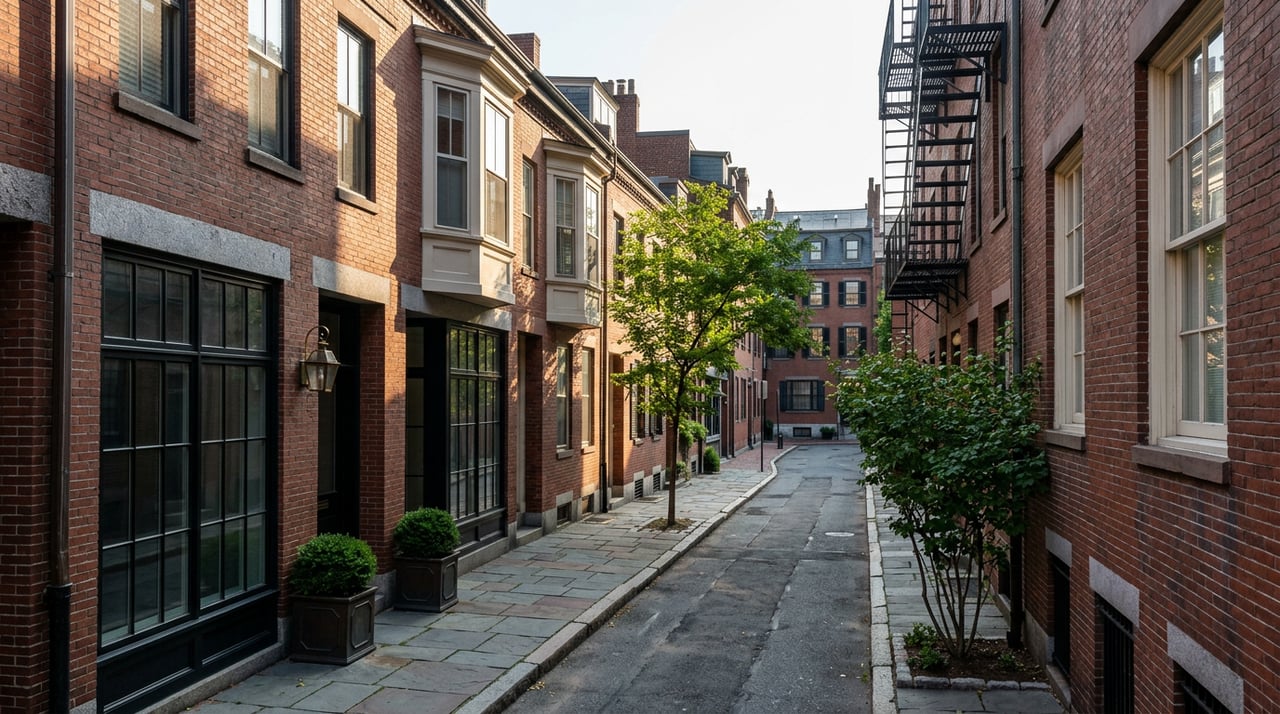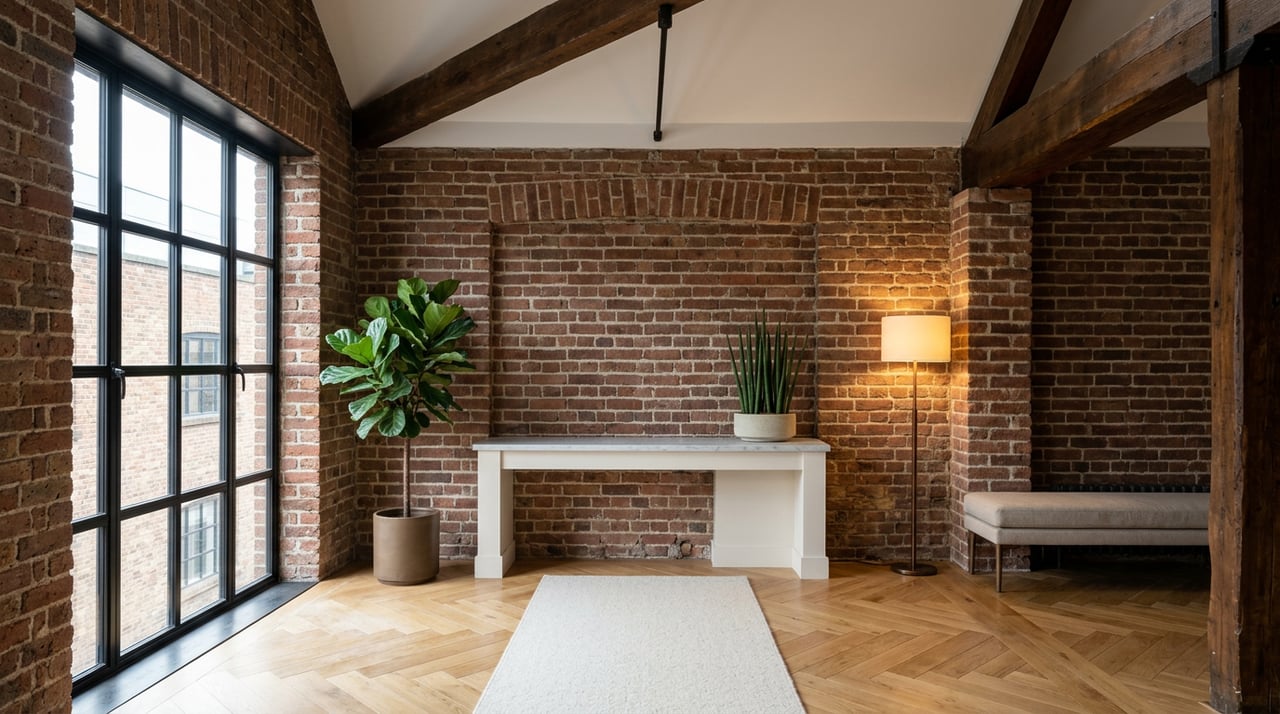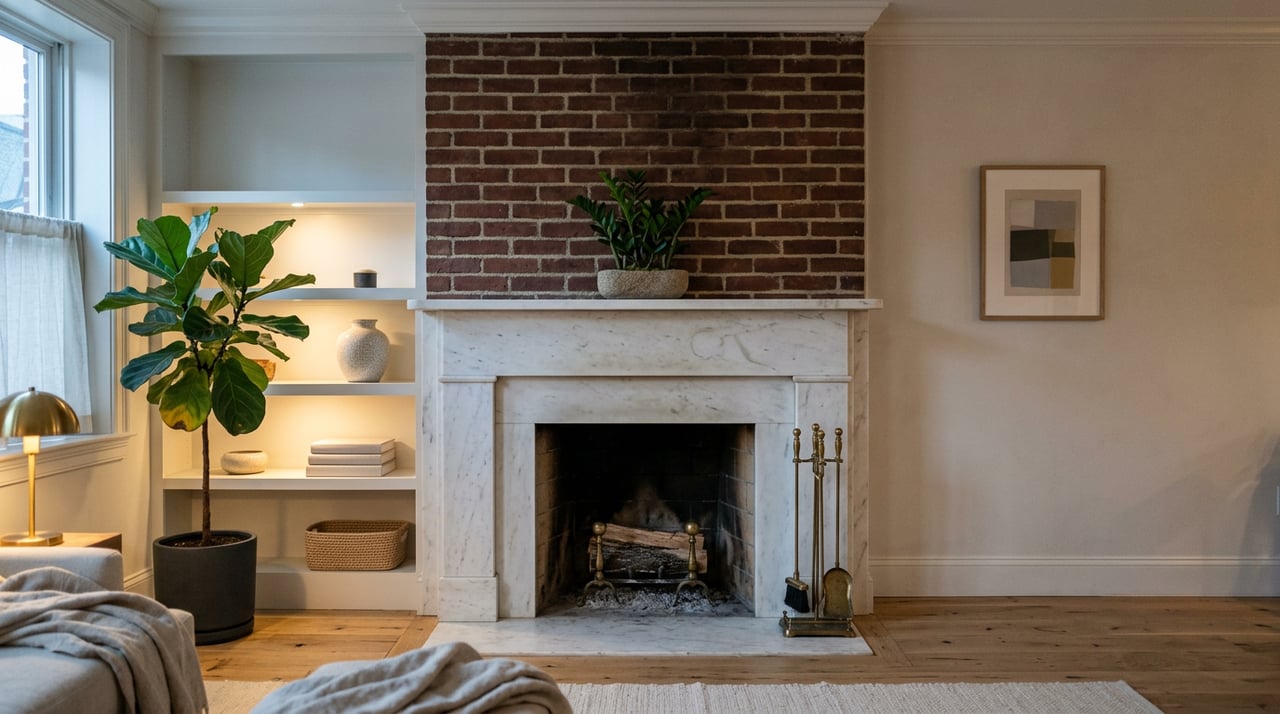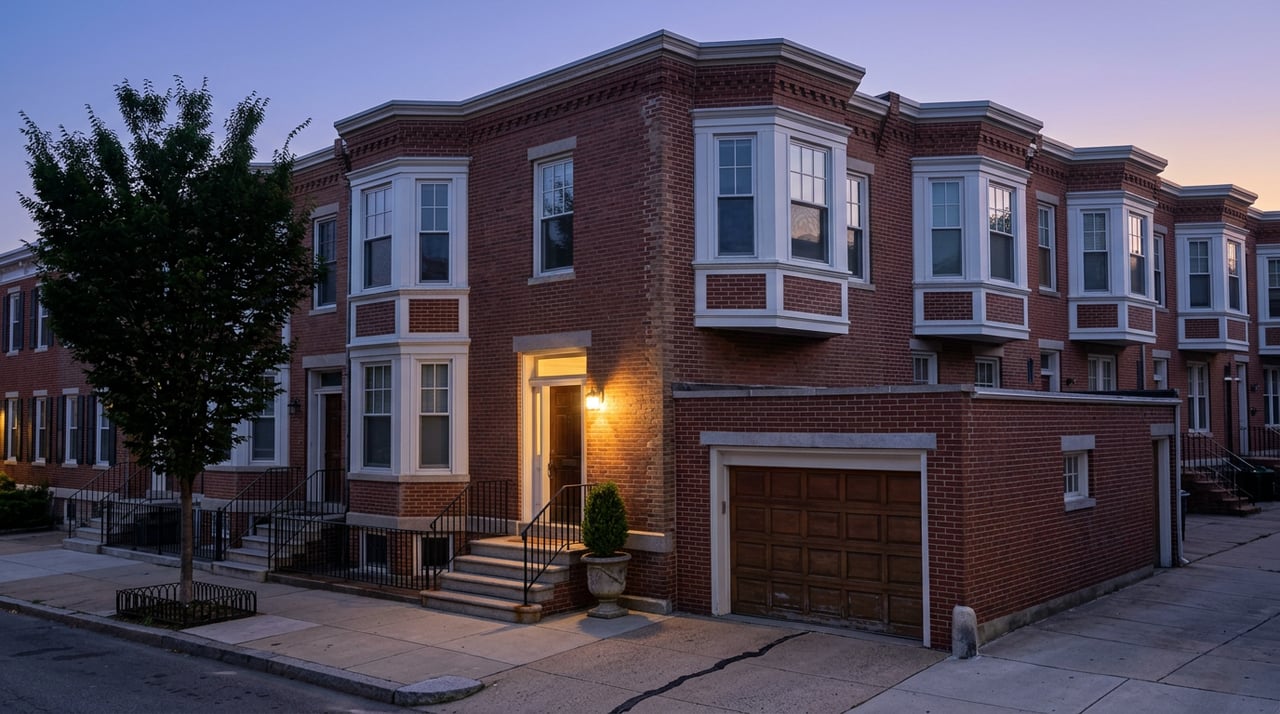
Pull up South Boston condo listings for a single week this fall and the price-per-square-foot column will not make sense. Two nearly identical two-bedroom conversions, same brick triple-decker shell, same 950 square feet, same distance to the Broadway T stop, can post price-per-square-foot figures that differ by hundreds of dollars. Local market data for South Boston has put that range as wide as $800 to $1,100 per square foot for otherwise comparable units, with Seaport-adjacent and waterfront listings sitting at the top of the band. That is not a rounding error. It is a sign that the number itself is measuring the wrong thing.
Price per square foot assumes a home's value comes entirely from its interior. In most of Boston, that assumption mostly holds. In South Boston, it breaks down over one recurring detail: whether the unit comes with a deeded parking spot. A spot attached to the deed functions almost like a second, smaller piece of real estate riding inside the same transaction, and it can move a listing's headline number more than a renovated kitchen or an extra half bath.
Why the Same Square Footage Sells for Different Money
Over the three months ending June 2026, the median sale price across South Boston came in at $995,000, up 4.8% from the same period a year earlier, while the median price per square foot actually slipped slightly to $834. Those two numbers moving in opposite directions is itself a clue. Prices are climbing, but the mix of what is selling, and what is bundled into each sale, is shifting underneath the median.
Separately, one 2026 market analysis of South Boston condo activity found the average condo sale landing at $958,000 across 106 closed sales year-to-date, with units moving at 98.6% of list price after an average of 40 days to offer. Inventory sat at roughly 4.6 months of supply, which still favors sellers but is looser than the ultra-tight conditions of a few years ago. None of those figures break out parking separately, because MLS reporting rarely does. That is exactly the gap a buyer needs to close manually before trusting a comp.
Deeded, Tandem, or Leased: Three Very Different Deals
Not all parking in South Boston works the same way, and the distinction matters more than most buyers expect walking in.
A deeded space is recorded as part of the real property, described in the unit's deed or the condominium's master deed under Massachusetts condominium law. It transfers with the unit at resale unless the documents say otherwise, and owners typically have more latitude to install upgrades like an EV charger with board approval.
A tandem space, common in the borough's tighter garages and converted brownstones, can be deeded or simply assigned, with one car parked behind another. It solves a space problem but introduces a coordination problem: two drivers who need to come and go independently will eventually collide on timing.
A leased or assigned space is not owned by the unit at all. It comes through a building's rules or a monthly license, which means the association or landlord can adjust price or policy later. The upfront cost is lower, but the long-term certainty is not there.
A parking spot in Southie is not an amenity line on a listing sheet. It is a second, smaller real estate transaction happening inside the same deed.
That distinction is why two units with identical square footage can carry a real price gap. A buyer comparing price per square foot across listings without asking which parking category applies is comparing two different products.
Three Pockets, Three Different Math Problems
South Boston is not one market wearing one price tag. Local reporting on 2026 sales activity consistently breaks the neighborhood into a few working pockets, each with its own relationship between price and parking.
| What defines it | Parking reality | |
|---|---|---|
| East Side / City Point | Older triple-decker stock near Castle Island, strong walkability and beach proximity | Deeded spots are scarcer here; many units rely on street parking or a shared driveway |
| West Broadway / M Street / K Street corridor | The rebuilt triple-decker conversions that define the neighborhood's condo identity | Deeded parking is common and commands a real premium; 2026 pricing for a two-bedroom with a spot has landed roughly $850,000 to $1,050,000 |
| Waterfront / Seaport Edge | Newer construction and luxury conversions closest to the Seaport District | Garage parking is typically built in or sold as its own unit, pushing price per square foot toward the top of the neighborhood's $800-to-$1,100 range |
The West Broadway corridor is worth sitting with. It is the stretch most people picture when they think of a Southie condo, and it is also where the parking premium is most visible, because so many of these buildings sit on lots too narrow for a garage. A deeded spot there is not a convenience. It is scarce inventory with its own supply and demand curve, layered on top of the housing unit's.
A Development That Could Reshape the Parking Math, Eventually
Any conversation about South Boston's future supply now has to include the Reserved Channel Development, the 42-acre waterfront project led by Oxford Properties and Pappas Enterprises at 300 West First Street. The developers acquired the site in 2019, and their original plan, filed in 2023, called for roughly 205 residential units alongside more than a million square feet of lab and commercial space. The revised plan, unveiled in early 2026, flips that ratio: about 935 housing units within 1.56 million square feet, with the commercial and lab share reduced in favor of residential density, according to Boston Agent Magazine's reporting on the filing.
The project remains in active public review. A related filing in June 2026 proposed an additional 287 units at 370 West First Street as part of the same master plan, with the public comment period on that piece closing in early September 2026. None of this changes today's comps. Large waterfront projects like this move through design review, environmental filings, and construction timelines that stretch years, not months, and as of this summer the city's own development tracking page for the project still showed the review underway.
What it does change is the long-range picture. Nearly a thousand new units on the South Boston waterfront will almost certainly arrive with structured or garage parking built into the design, the way most large new-construction projects do. That is a different parking model than the tandem spots and shared driveways that define the older triple-decker stock a few blocks inland. Buyers weighing a purchase today do not need to wait on this pipeline, but they should understand that the neighborhood's parking economics are not static, and the gap between older conversions and new construction is likely to widen before it narrows.
What This Means If You're Comparing Southie to Somewhere Else
Boston's condo market is really a collection of small, distinct markets, and price per square foot only works as a comparison tool within very tight boundaries. Citywide, the median condo price sat near $725,000 in the first quarter of 2026, while a Back Bay condo averaged closer to $1.9 million and Seaport new construction pushed price per square foot toward $2,200, the highest in the city. Citywide inventory was also running about 15% higher year over year, giving buyers more room to negotiate than they have had in several years.
Against that backdrop, South Boston's $800-to-$1,100 range looks moderate. But a buyer using that range to size up a specific unit needs to ask one question before comparing anything else: does this price include a deeded spot, a tandem arrangement, a leased space, or nothing at all. Answer that first, and the rest of the comp starts to make sense.
Frequently Asked Questions
Does a deeded parking space get its own line on the appraisal? Lenders and appraisers generally value the unit and its deeded parking together as part of the same property, since the space is recorded in the deed. A leased or assigned space, by contrast, is not part of the real property and typically will not factor into the appraised value the same way.
Can I rent out my deeded parking spot if I don't need it? That depends on the condominium's governing documents. Some associations allow owners to lease a deeded spot to another resident or unit owner; others restrict use to the owner. Reviewing the master deed and bylaws before closing is the only way to know for certain.
Why do some triple-decker conversions have no parking at all? Many of South Boston's classic triple-deckers were built on narrow lots before car ownership was standard. Retrofitting a garage or even a single surface spot is often not physically possible, which is why older conversions on the interior streets tend to rely on street parking while renovated buildings closer to the main corridors are more likely to have added a deeded or tandem space during conversion.
If you're trying to figure out what a specific South Boston listing's parking situation actually means for its price, or how a unit on the West Broadway corridor stacks up against something newer near the Seaport, Rooney Real Estate has spent decades pricing exactly this kind of detail into South Boston deals. Contact Jackie for a consultation before you make your next offer.