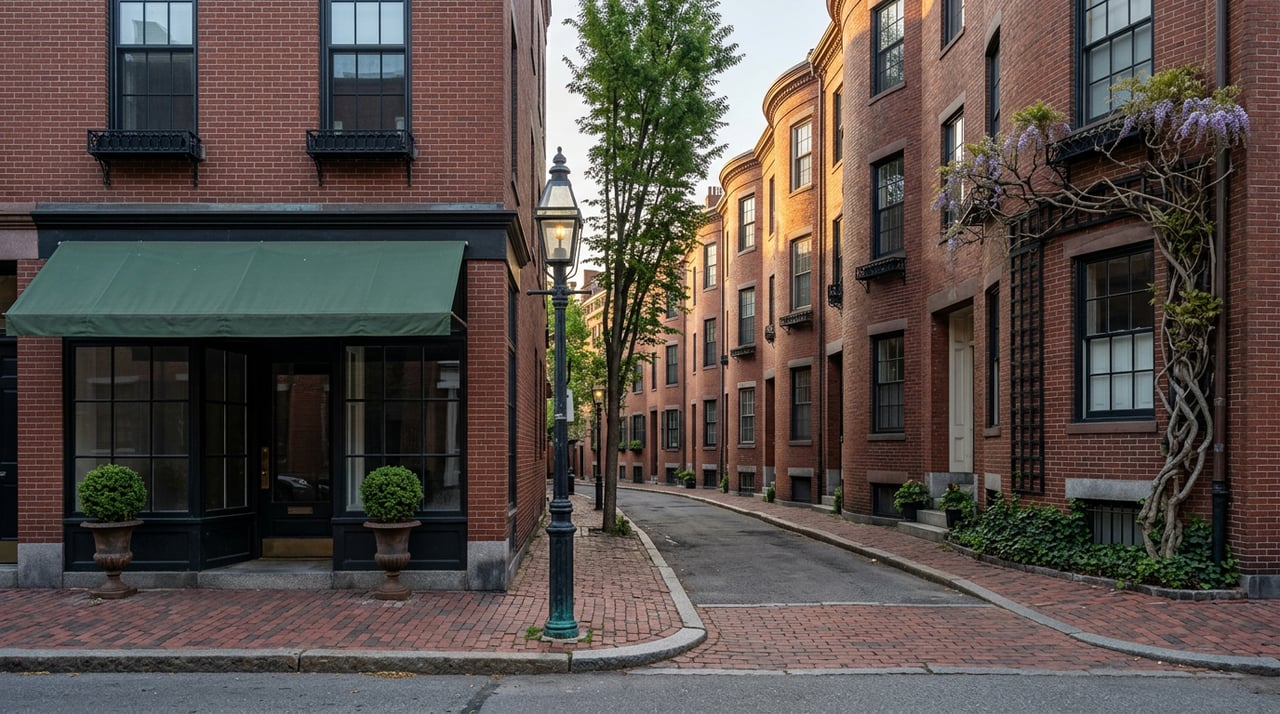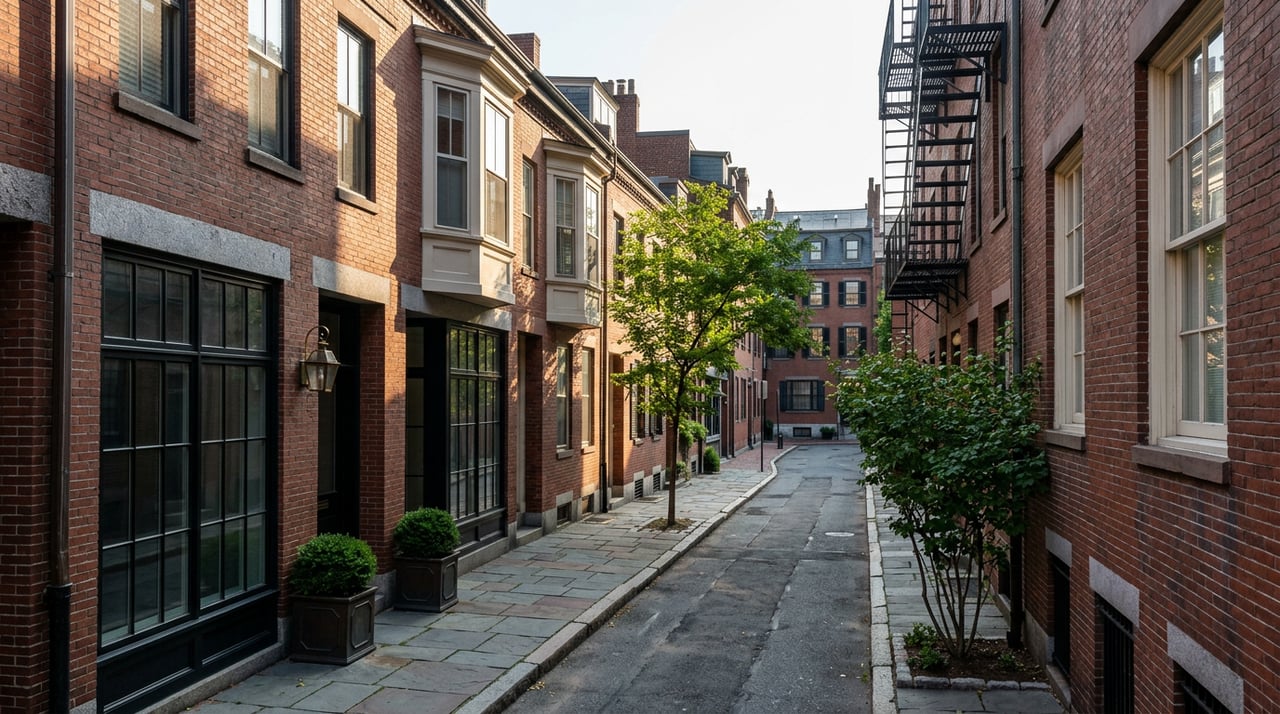
Tom Damigella spent close to seven years trying to find a permanent home for the North End Historical Society. When he finally signed papers this year on a ground-floor space at 3 Prince Street, he learned something nobody had planned for: his own grandparents lived in that exact building in the 1920s. He found out after the lease was already done.
That coincidence is a nice story on its own. But it only means something once you understand how close this museum came to never having an address at all, in a neighborhood where every square foot of storefront has a restaurant or a bakery waiting to outbid a nonprofit for it.
Sixteen Years, One Signature
The North End Historical Society incorporated in 2010 with a plain mission: collect and preserve the neighborhood's history and put it in front of the public through lectures, publications, and eventually exhibits. For most of the following decade, that last part lived in storage boxes and slide decks at the North End branch of the Boston Public Library. Every time a storefront opened up on Hanover, Salem, or Prince Street, a restaurant or retail tenant who could turn a profit fast enough got there first. A museum charging ten dollars a head was never going to win that bidding war on its own.
What changed the math was Frank DePasquale, the restaurateur behind more than a dozen North End spots including Trattoria Il Panino and Umbria. DePasquale bought the ground-floor condo at 3 Prince Street and structured the deal so the historical society pays him one dollar a month plus utilities for ten years. State Representative Aaron Michlewitz, who chairs the House Ways and Means Committee, arranged additional funding once the space was locked in. The museum opened to the public the week of July 21, 2026, with a soft opening the week before that brought Michlewitz, DePasquale, and longtime society supporters to Prince Street for what the Boston Globe described as a quiet ribbon cutting, gutted brick and exposed wiring only recently replaced by finished walls.
DePasquale's own explanation for the deal was short: "It's needed in the North End. It's high time."
Four Hundred Years in Twenty Feet of Storefront
The museum organizes its story chronologically, moving from the 1630s waterfront settlement of merchants and mariners through Paul Revere's 1775 ride from his house on North Square, then into the waves of Irish, Jewish, Portuguese, and Italian families who each remade the neighborhood after arriving. A dedicated gallery covers more than a century of Italian American culture on those same blocks: the religious societies, the family businesses, the feasts that still shut down Hanover Street every August. Touchscreen kiosks and rare artifacts, built with the exhibit design firm Trivium Interactive, walk visitors through the full arc.
The location does double duty. It sits on the Freedom Trail, wedged between the Paul Revere House and North Square, so the tourists who've walked past this stretch for decades finally have a reason to step inside. But the museum wasn't built for them first. It exists so that the North End's multigenerational memory, the kind that has always lived in kitchen conversations and feast committee meetings, finally has a fixed location instead of depending on who happens to still be around to tell it.
The Number the Museum Is Racing to Keep
At a planning presentation at the North End library branch in February 2026, Damigella pointed to research turning up roughly ninety butcher shops that operated in the neighborhood around 1900. Today there is one. According to reporting on that meeting, nearly half the room raised their hands when asked who remembered animal carcasses hanging in deli windows.
That single comparison, ninety against one, explains the museum's urgency better than any fundraising pitch could. Not everything from that older economy disappeared. Bova's Bakery, a few blocks over, has run continuously for more than ninety years and still sells fresh bread around the clock. But for every business that survived that long, dozens didn't leave so much as a photograph behind. The museum's seven installations are, in part, a bet that this particular decade is the last one where anyone who remembers the ninety butcher shops is still alive to ask.
When to Actually Go
The museum keeps standard hours of 10:30 a.m. to 5 p.m., Tuesday through Sunday, with $10 general admission and discounts for seniors and students. During the summer feast weekends it stayed open until 8:30 p.m. on Fridays and Saturdays, letting residents duck in for twenty minutes between the noise of Fisherman's Feast or Saint Anthony's Feast and dinner reservations they'd booked around the crowds.
That extended feast-weekend schedule doesn't apply right now. The last of this year's feasts wrapped up on August 30, and the museum has settled into its regular Tuesday-through-Sunday hours for the fall. If you've been putting off a visit because Hanover Street was too packed to think straight in August, this is actually the better window. The streets are back to their normal rhythm, the museum isn't competing with vendor tents for foot traffic, and you can walk through four centuries of the neighborhood's history without also elbowing your way past a churro cart.
One Family's Insurance Policy for the Whole Neighborhood
The 3 Prince Street deal isn't DePasquale's only quiet investment in keeping the North End's history intact. He also paid for a fence and new lighting at All Saints Way, the small alleyway off Battery Street that the late Peter Baldassari started decades ago as an informal shrine, its walls lined with framed photographs of Catholic saints. Two different preservation projects, same benefactor, same underlying pattern: when the neighborhood's own economics can't support memory-keeping on their own terms, someone who already made his money here is choosing to spend some of it making sure the building outlasts whatever business currently occupies it.
That is the real story behind this museum, more than the exhibits themselves. The North End's history now depends less on public grants or foundation money than on the goodwill of operators who grew up here and decided that some things shouldn't be left to the rental market to decide.
Next time you cut down Prince Street on your way to North Square, you're walking past both versions of that same fact at once. Somebody's grandparents once lived behind that door. Now the whole neighborhood's memory does too.
If you're the kind of North End resident who notices when a building changes hands and wonders what it means for the block, that instinct is worth something. Rooney Real Estate has spent decades watching these small civic shifts play out across South Boston and the surrounding neighborhoods, because they usually say more about where a place is headed than any comp sheet can. Contact Jackie for a consultation whenever you're ready to talk about what's actually happening on your street.