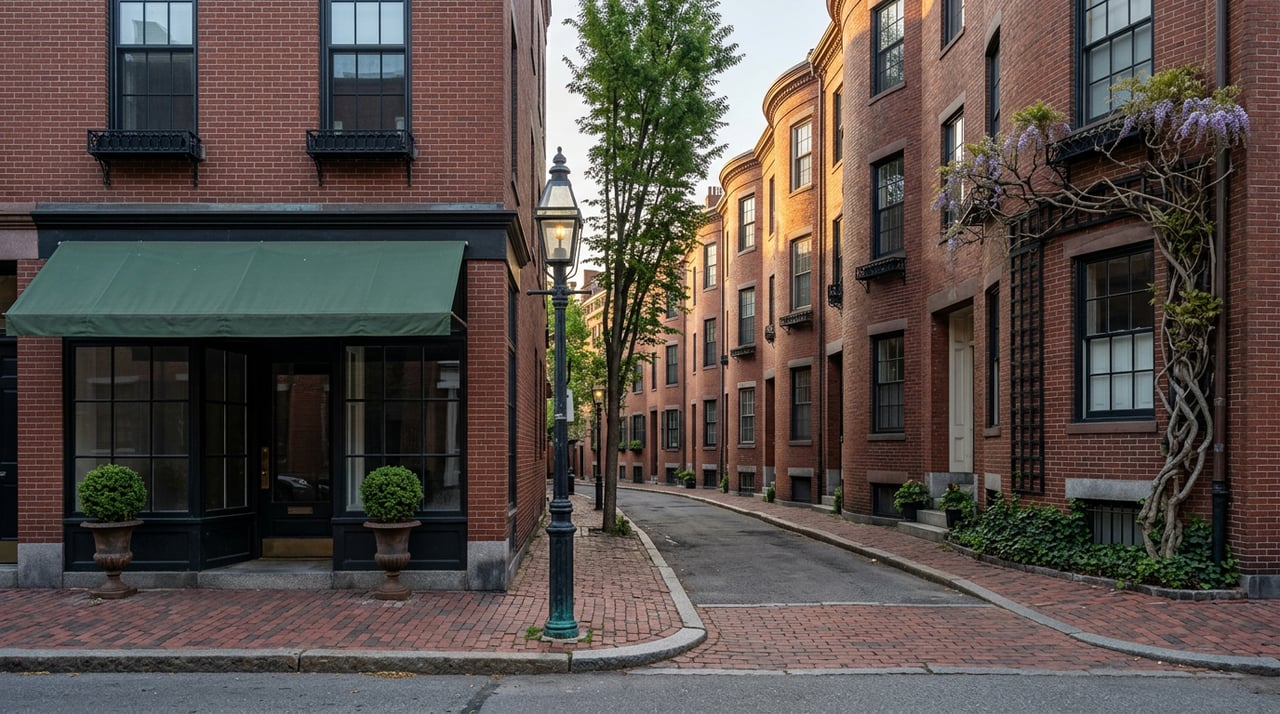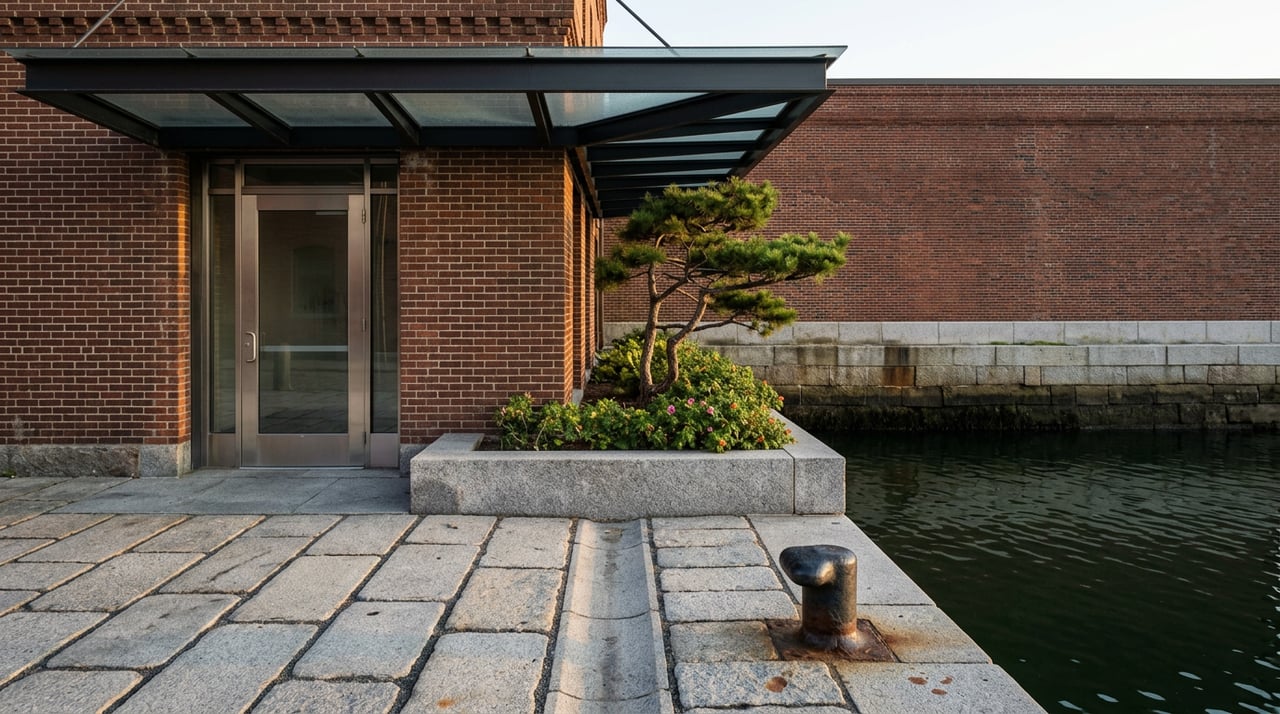
A year ago, the stretch of pavement under the Tobin Bridge on Lowney Way was the kind of place you walked through quickly and didn't think about again. Traffic noise from the overpass, a narrow sidewalk, nothing to look at. If you lived on the Bunker Hill side of Charlestown and worked or ate near the Navy Yard, you crossed under that bridge because it was the fastest way, not because you wanted to.
This summer, people are still crossing under it. But now they're stopping. A thirteen-animal bronze banquet table sits under the highway at Lowney Way, and on a warm evening you'll find kids climbing into the two open seats left for the public. Keep walking toward the water and you hit Shipyard Park, where a bronze hippo shares a quiet coffee moment with a character named Rabbitwoman. Keep going to Dry Dock 2 and there's the piece everyone actually came for: a 36-foot-long, seven-ton bronze octopus called The Arms of Friendship, its eight limbs wrapped around a set of endangered animals.
The pieces are collectively called Bridge of Joy, and the name is not incidental. The nonprofit Navy Yard Garden & Art built this route specifically to connect two halves of a neighborhood that a highway has quietly kept apart.
The line the octopus was built to erase
Charlestown is split by the Tobin Bridge in a way that's easy to miss if you only pass through it on the Freedom Trail. Robin DiGiammarino, president of Navy Yard Garden & Art, put it plainly when the project was announced: the goal was to "connect two parts of Charlestown divided by the Tobin Bridge through public art." The nonprofit's own goal-setting process, according to local coverage, required the art to be "large, unexpected, interactive and joyful," which is a specific brief for a piece of public infrastructure that's really trying to fix a walking pattern.
Melanie Soto, a community resource specialist at the Charlestown Coalition, was more direct about what that pattern looked like before the sculptures arrived. She described an "invisible line that maybe some folks are not crossing" between the two sides of the neighborhood. Her hope for the installation wasn't about tourism. It was that residents on both sides would "intermingle in a way that they maybe have not before."
That's the part of this story that doesn't show up in a typical "new art in the neighborhood" writeup. The octopus is not decoration dropped into an empty lot. It's placemaking aimed at a specific, named problem: a highway that functions as a social boundary, and a nonprofit betting that people will walk toward something whimsical even when they wouldn't walk toward nothing.
"People are going to come to their neighborhood and treat it like a Boston Common or a Public Garden and experience it in the way that our kids already experience it. It is a beautiful, specific, special thing." — Melanie Soto, Charlestown Coalition
One year in, that bet looks like it's paying off. When the exhibit opened on August 6, 2025, more than 400 people showed up on a weeknight, which is not a number you get from a passive art installation. That's a number you get from a neighborhood that wanted an excuse to gather.
Three stops, one walkable route
If you haven't done the full loop yet, here's what's actually where:
| Sculpture | Location | What it is |
|---|---|---|
| The Arms of Friendship | Dry Dock 2, between the two large anchors | A 36-foot, 7-ton bronze octopus cradling endangered species in its limbs |
| The Wild Table of Love | Under the Tobin Bridge at Lowney Way | Thirteen animals seated at a bronze banquet, with two open seats for visitors |
| The Hippo Was Hungry to Try New Things | Shipyard Park, brick plaza near the MBTA ferry | Rabbitwoman and a hippo sharing a quiet coffee moment |
The whole route runs from City Square Park to the Little Mystic Channel, and the nonprofit behind it describes it as a short, walkable stretch along the waterfront rather than a trek. The sculptures are staying put through July 2027, so this isn't a one-summer novelty. It's closer to a permanent addition to how the neighborhood moves.
The walk doesn't end at the art
What makes this more than a photo stop is what's sitting at either end of it. Charlestown's evening routine has quietly reorganized itself around this loop, and the businesses on both sides of it are the ones actually benefiting.
Finish the walk at the water and you land at Pier 6, the Navy Yard restaurant with a roof deck and a patio right on the harbor, a few hundred feet from the USS Constitution. Head the other direction and you're back near Warren Tavern, which opened in 1780 and is generally recognized as the oldest tavern in Massachusetts, a place where the crowd on a Tuesday night looks a lot like the crowd on a Saturday.
A few other fixtures worth building an evening around:
- The Charlestown Farmers Market runs every Wednesday at Thompson Square, at the corner of Main and Austin Street next to the Hubway bike stand, rain or shine.
- Friends of the Training Field's summer concert series kicked off its 2026 season on July 22 with Dennis Taylor, a Charlestown native, singing classic soul and R&B at the Training Field.
- Paul Revere Park, tucked beneath the Zakim Bridge, has its own quieter piece of public art: the Charlestown Bells, a sound sculpture by Paul Matisse that you're actually meant to play.
None of these are new to Charlestown. What's changed is that the Bridge of Joy route gives them a connective thread. A Wednesday used to mean the farmers market or it didn't. Now it can mean the farmers market, then a walk through the sculpture trail, then dinner at Pier 6, all without getting in a car.
A free plan with a two-year shelf life
The easy version of this story is "new statue, take your kids to see it." The more useful version is that a nonprofit identified a specific dead zone in a dense, historic neighborhood, built something joyful and slightly absurd into that exact spot, and watched foot traffic reroute itself in response. A highway underpass that used to be a place nobody lingered is now a stop on the route. That's a small, measurable shift in how a neighborhood actually uses its own ground, and it's the kind of change that outlasts a single summer news cycle precisely because the sculptures aren't going anywhere until at least July 2027.
If you live in Charlestown, the practical takeaway is simple: the loop is free, it's short, and it connects to almost everything else you'd want to do on a weeknight. If you're new here or just haven't made it to the Navy Yard side of the neighborhood in a while, this is the season to close that gap yourself.
Charlestown keeps finding new reasons to walk the whole neighborhood instead of just the half you know best. If you're thinking about what it actually looks like to live on either side of that Tobin Bridge line, from the historic streets near Monument Square to the condo buildings closer to the Navy Yard, Jack Rooney has spent decades tracking how Charlestown's blocks connect to each other, one street at a time. Contact Jackie for a consultation when you're ready to talk about what that means for you.