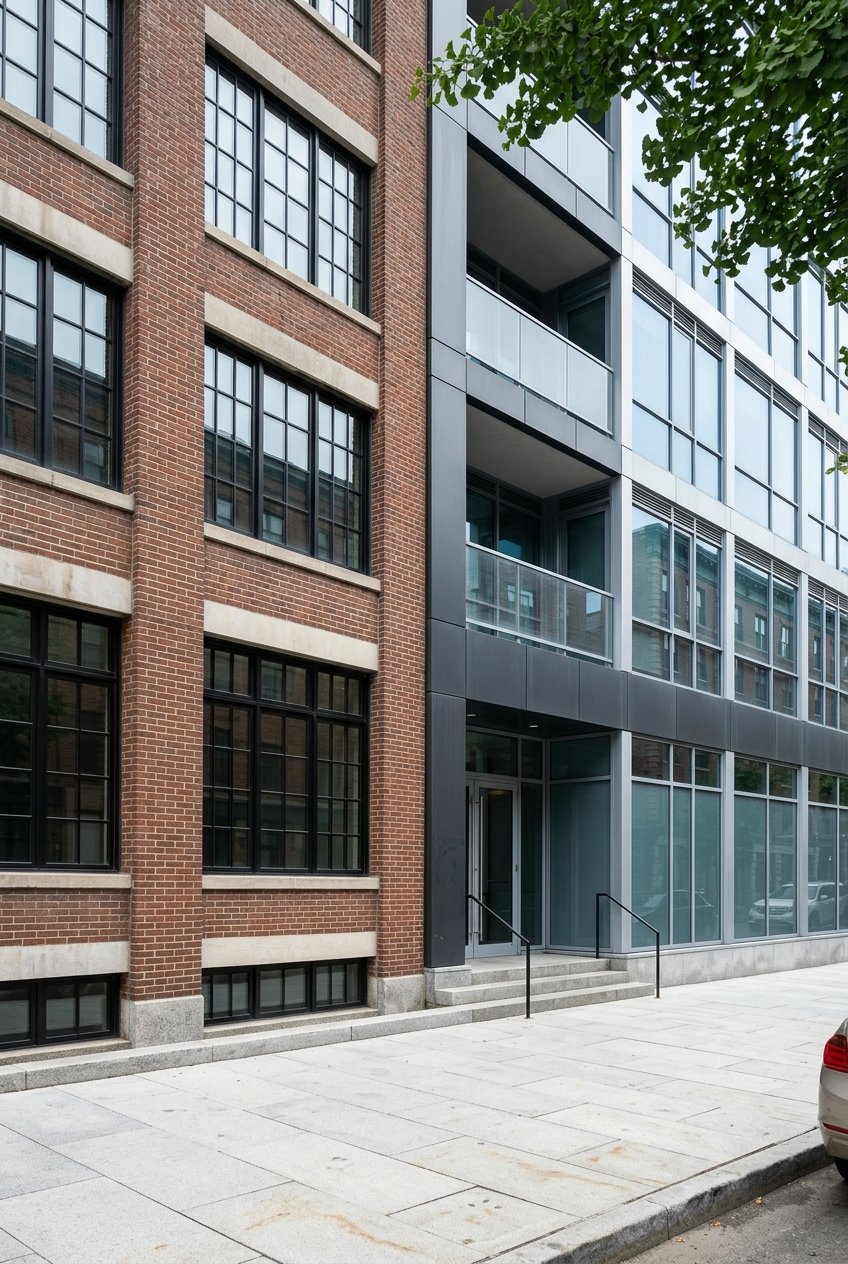
Trying to choose between Seaport and South Boston for your next condo? You are not alone. Both neighborhoods put you close to downtown Boston, but the day-to-day experience can feel very different depending on the building, the block, and your budget. If you are weighing modern full-service living against a more varied neighborhood feel, this guide will help you compare the two with more clarity. Let’s dive in.
Seaport vs South Boston at a glance
At a high level, Seaport and South Boston appeal to different condo buyers.
Seaport tends to draw buyers who want newer construction, larger luxury buildings, and a more amenity-driven lifestyle. South Boston usually appeals to buyers who want a wider range of price points, more building variety, and a neighborhood feel that changes from block to block.
That difference shows up clearly in today’s inventory. Redfin reports about 54 condos for sale in Seaport at a median listing price of $2 million, compared with about 208 condos for sale in South Boston at a median listing price of $1.05 million.
Condo stock feels very different
Seaport is newer and more full-service
Much of today’s Seaport condo inventory is concentrated in large-format buildings along the waterfront and nearby streets. Current listings commonly include buildings like St. Regis, Echelon, 22 Liberty, 50 Liberty, and Pier 4, with asking prices ranging from roughly $799,000 to multi-million-dollar penthouses.
From a lifestyle standpoint, that often means a more locked-in, managed building experience. Buyers looking in Seaport are often choosing between concierge buildings, valet parking, private amenities, and newer common areas rather than between many different small-scale property types.
South Boston offers more variety
South Boston has a more mixed housing base. According to a City of Boston planning profile, assessed properties in 2011 included 58.6% condo units, 13.4% three-family properties, and 11.0% two-family properties.
That matters because it helps explain why South Boston often feels more varied from one listing to the next. You may see condo conversions, smaller buildings, and homes in different formats, which creates more choice across layout, scale, and price.
Price gap shapes the decision
Seaport carries a higher entry point
If budget is a major part of your search, Seaport and South Boston are not on the same pricing plane right now. Seaport’s median condo listing price sits at $2 million, and the active range stretches from about $799,000 to $44.5 million.
That higher floor often lines up with what buyers are paying for: newer construction, a premium waterfront setting, and a stronger concentration of full-service buildings. For some buyers, that tradeoff makes sense because it matches the lifestyle they want.
South Boston gives you a broader price ladder
South Boston’s median condo listing price is about $1.05 million, with listings running from roughly $515,000 to $2.1 million. That wider middle of the market can create more room to compare options without jumping immediately into Seaport-level pricing.
For buyers who want flexibility, South Boston often gives you more opportunities to balance location, square footage, finishes, and monthly ownership costs. It is not a low-cost market, but it does offer a broader ladder of choices.
Commute and convenience depend on the block
Seaport is more consistently transit-oriented
Seaport addresses near Seaport Boulevard score around 89 to 91 for walkability and 94 to 97 for transit on Walk Score. One location page notes that Seaport Boulevard is about a 10 to 12 minute walk from South Station.
The City has also added wayfinding signage across the South Boston Waterfront and launched a commuter ferry connecting North Station to the South Boston Waterfront. In practical terms, Seaport tends to offer a more consistent commute story across the neighborhood.
South Boston changes by area
South Boston is more block specific. West Broadway locations can score around 92 for walkability and 85 for transit, with some addresses just a minute from the Broadway Red Line stop.
Other parts of the neighborhood feel different. Andrew Square examples come in around 86 walk and 69 transit, while City Point is closer to 82 walk and 52 transit. That means your day-to-day routine in South Boston depends much more on exactly where you buy.
Lifestyle looks different every day
Seaport feels curated and amenity-rich
Seaport has one of the strongest concentrations of destination amenities in this comparison. The area includes the Fort Point arts neighborhood, the Children’s Museum, Martin’s Park, waterfront public space improvements, and a growing network of pedestrian wayfinding.
Inside the buildings, listing descriptions often highlight concierge services, valet, pools, spas, and private outdoor space. If you want your condo building to handle more of your day-to-day convenience, Seaport often checks that box.
South Boston feels more neighborhood-based
South Boston’s lifestyle story is more local and more spread out through the neighborhood itself. The City highlights beaches, parks, the Curley Community Center family beach, Medal of Honor Park, and three city community centers.
That can make South Boston feel more residential in your everyday routine. Instead of relying as heavily on in-building amenities, many buyers are choosing access to outdoor space, neighborhood institutions, and a more lived-in street pattern.
Fort Point adds another layer
If you are comparing Seaport and South Boston, Fort Point deserves a closer look because it can blur the line between the two. Boston planning materials often treat Seaport as part of the South Boston Waterfront, while Fort Point is separately recognized as a historic district.
The Fort Point Channel Landmark District, designated in 2009, includes one of Boston’s largest cohesive collections of late-19th- and early-20th-century industrial loft buildings. For buyers, that can mean an entirely different feel from a glass tower or a traditional South Boston condo conversion.
Which buyer usually prefers Seaport?
Seaport often makes the most sense if you are looking for:
- Newer construction
- Full-service building amenities
- A more uniform luxury condo experience
- Strong access to downtown and South Station
- Waterfront surroundings and destination amenities
This is usually the cleaner fit for buyers who want a modern, turnkey building with a premium lifestyle package built in.
Which buyer usually prefers South Boston?
South Boston often makes the most sense if you are looking for:
- More options across price points
- Greater building variety
- A neighborhood feel that changes by section
- Access to parks, beaches, and community spaces
- Flexibility to prioritize location, size, or layout differently
For many buyers, South Boston offers more texture and more choice. That can be especially helpful if you want to compare several condo styles before deciding what fits your life best.
A simple way to decide
If you are torn between the two, start with how you want your home to function every day.
If you picture yourself in a newer building with staff, amenities, and a polished shared environment, Seaport may feel like the better match. If you care more about having a broader range of homes and a more neighborhood-driven experience, South Boston may be the stronger fit.
The key is not deciding which neighborhood is “better.” It is deciding which one fits your routine, priorities, and budget with the least compromise.
In a market like Boston, that kind of clarity can save you time and help you make a more confident move. If you want help comparing specific condo options in Seaport, Fort Point, or South Boston, Jack Rooney can help you weigh the tradeoffs and find the right fit.
FAQs
What is the main condo difference between Seaport and South Boston?
- Seaport is generally known for newer, large-format, full-service condo buildings, while South Boston offers a more mixed condo market with smaller buildings, conversions, and a wider range of price points.
Is Seaport more expensive than South Boston for condos?
- Yes. Current median condo listing prices show Seaport at about $2 million and South Boston at about $1.05 million.
Which area has more condo inventory, Seaport or South Boston?
- South Boston currently has more condo inventory, with about 208 condos for sale compared with about 54 in Seaport.
Is commuting easier from Seaport or South Boston?
- Seaport tends to offer a more consistent transit experience across the neighborhood, while South Boston depends more on the exact area, such as West Broadway, Andrew Square, or City Point.
What kind of lifestyle does Seaport offer condo buyers?
- Seaport often appeals to buyers who want waterfront access, destination amenities, and full-service buildings with features like concierge service, valet parking, pools, spas, and private outdoor space.
What kind of lifestyle does South Boston offer condo buyers?
- South Boston often appeals to buyers who want a more neighborhood-based lifestyle with access to beaches, parks, community centers, and a broader mix of condo types and locations.